
Forest Monitoring Projects
Several research and monitoring projects are happening in the Forest. Watch this page for updates, educational resources, and opportunities to get involved.
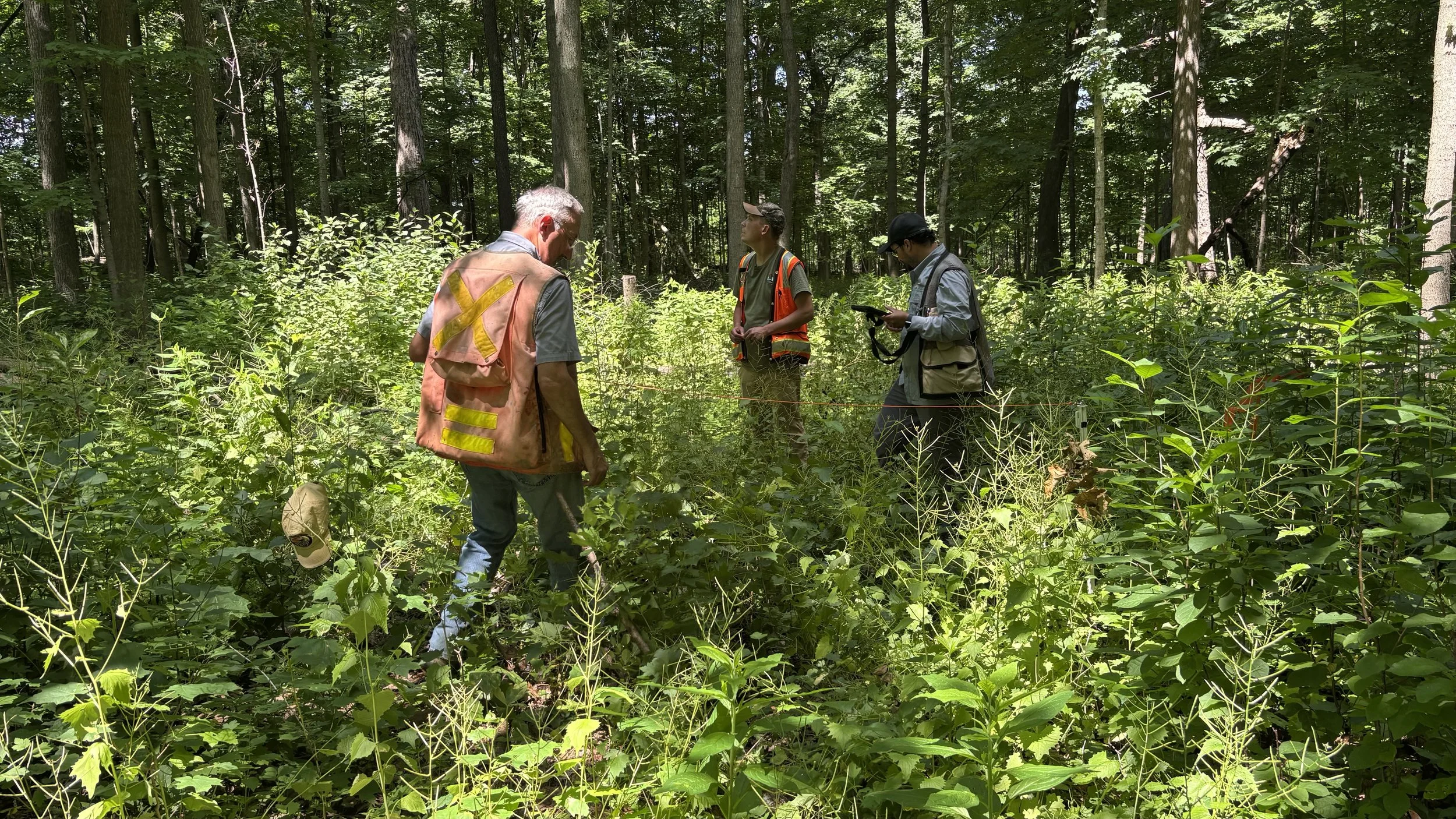
2021: Deer Exclosures and Forest Regeneration Monitoring (FRM)
Watch this quick video clip where DNR Foresters and the FEC teamed up in August 2021 to collect the first series of data on what’s happening in and around the Deer Exclosures in the Forest. This is called “FRM” - for Forest Regeneration Monitoring.
Forest regeneration is the way forests perpetuate themselves. Trees establish seedlings to take their place in the canopy one day. Understanding regeneration is one of the most important elements of sustainable forest management.
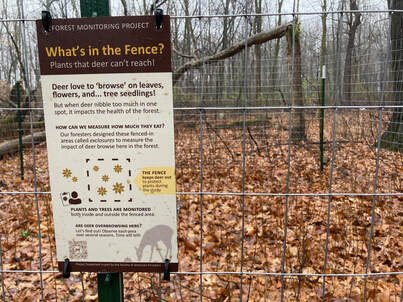
Why measure how much and what deer browse?
One limit (and there are many) to successful forest regeneration is deer browse. Deer love to nibble little trees and flowers. So, over the next few years of monitoring, we will learn more about the effects and extent of deer browse on forest regeneration here.
We monitor the successful (and any unsuccessful) regeneration of all species of tree seedlings and saplings in the forest to determine who is thriving and who isn’t.
Remember, no seedlings and saplings … no future forest!
April 2024: New Climate-Adaptive plantings
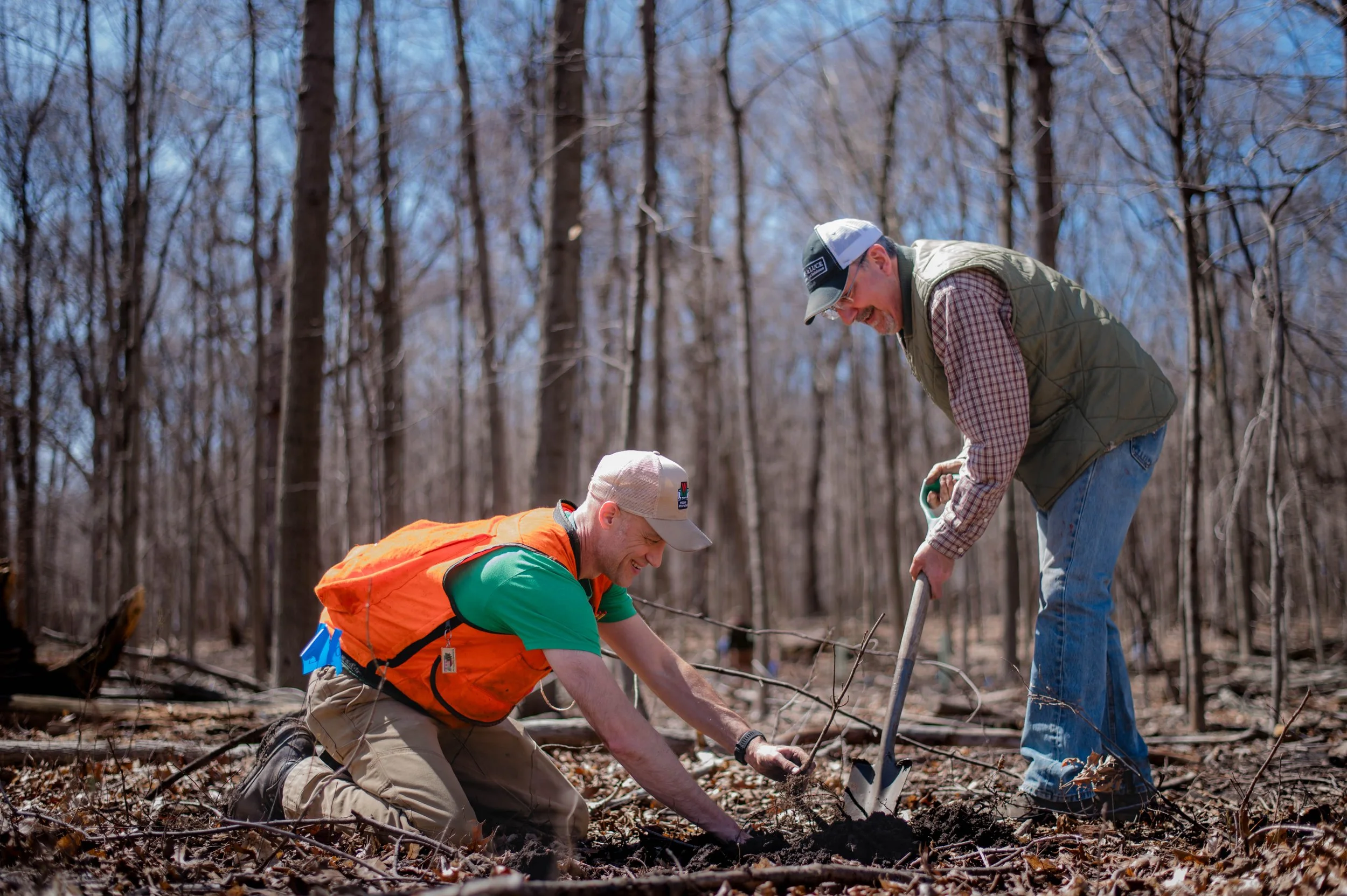
In April 2024, DNR foresters and a volunteer FEC crew spent a day planting 200 seedlings in climate-adaptive demonstration areas throughout the woodland. These new stands are a mix of trees known to thrive in southeastern Wisconsin as well as species expected to do well in our warming climate:
Butternut
Black cherry
Hackberry
Chinkapin oak
Southern pin oak
White oak
Sycamore
Black walnut
During the planting process, DNR foresters used GIS (geographic information system) technology to map out the location of each stand, and even each tree in it. About half of the oak seedlings had a tube placed around them in order to compare the impact of deer browse on unprotected trees.
July 2025: Measuring Our Growth
In 2025, we returned to these stands to locate the seedlings and document their growth, survival rate, and instances of deer browse or die-back. Many of the trees have survived so far, and we'll continue to monitor them over the next 5 to 10 years in ongoing climate change research. So far, the seedlings are showing a strong survival rate, with the trees in tubes growing up to 27 inches tall — while our smallest seedling is still going strong at just 1 inch tall.
Foresters also collected data as part of ongoing Forest Regeneration Monitoring (FRM), which was last done in 2023. First, we located pre-set plots throughout the woodland. These include inside the two deer exclosures, one area where many mid-story trees were removed to promote oak regeneration, and several other plots away from the trail. The foresters survey a circle surrounding the plot point, counting how many trees, their size category (from below 1 foot to 10 feet or larger), and the percentage of ground covered by trees or herbaceous plants. Over time, this gives us exacting insight into changes in the forest, and helps us compare growth patterns from previous years as well as similar landscapes.
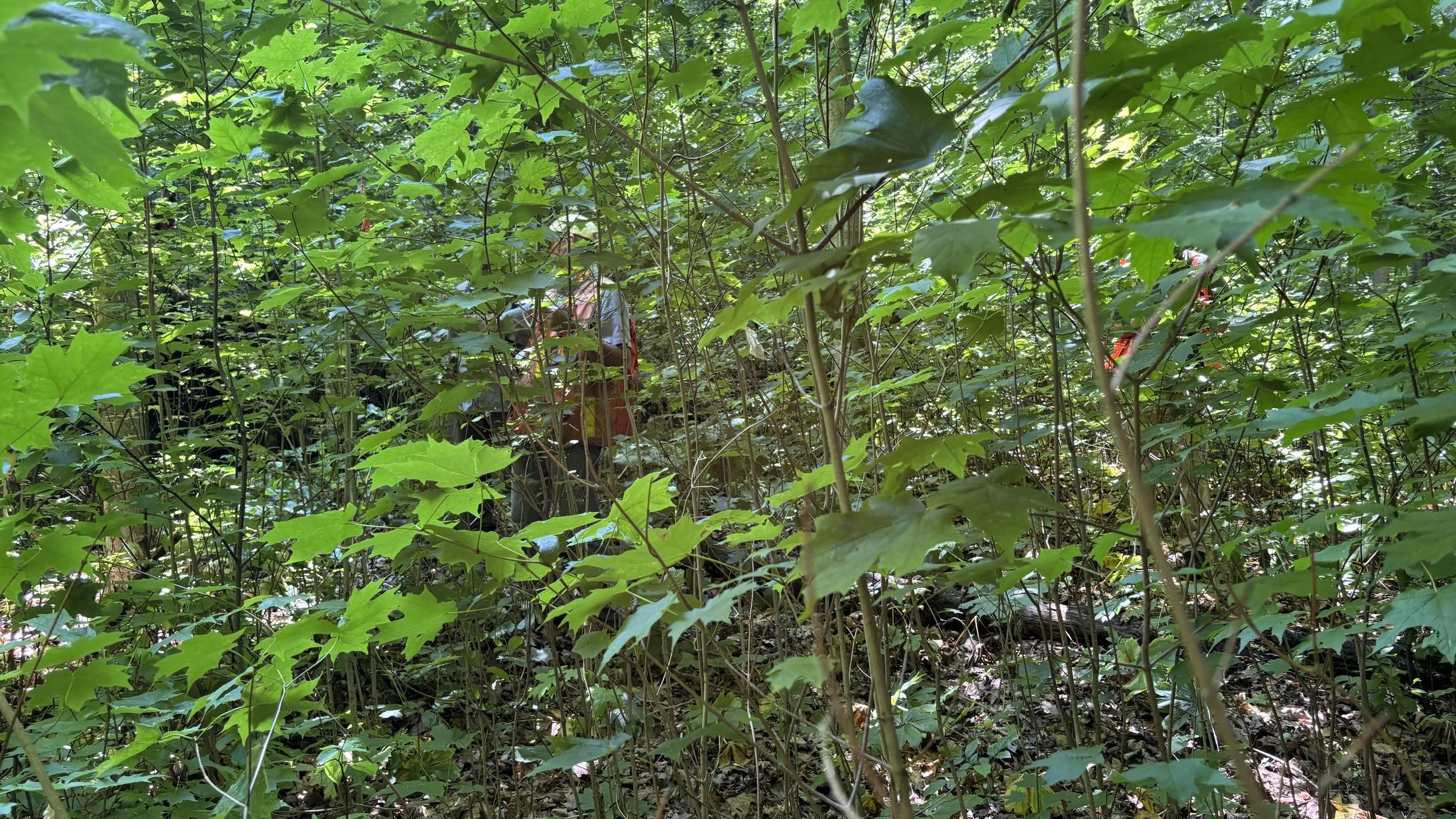
DNR Foresters conduct forest research in an area of dense maples.
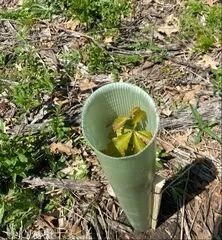
Oak seedlings in the reforestation area
Reforestation
Watch this area grow with us as we restore the heavily disturbed sections of forest, turning them back into beautiful and diverse native habitat for wildlife, and for us.
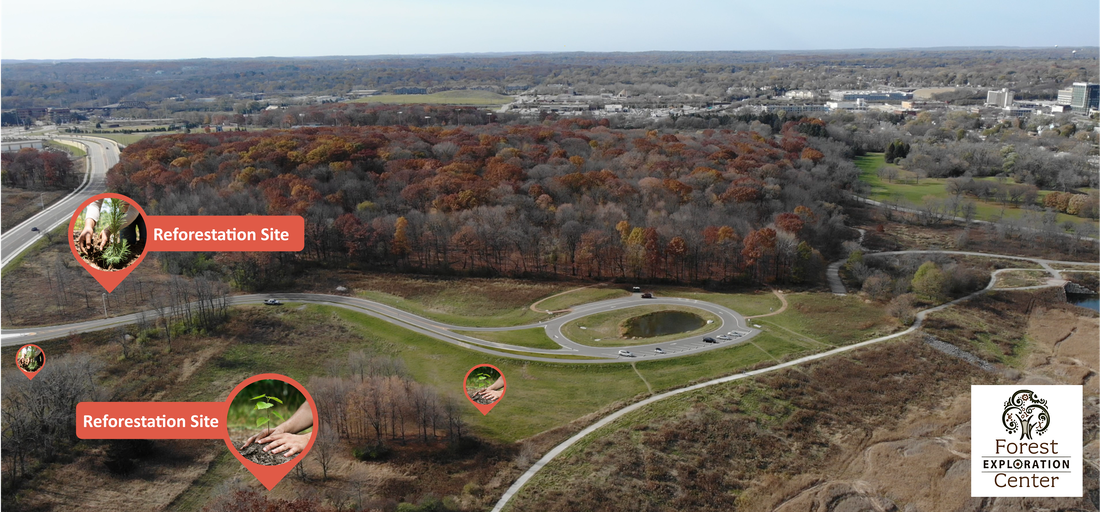
Aerial Perspectives of Restoration Areas
Invasive Buckthorn Removal and Tree Planting Projects within the disturbed areas along Swan Blvd and Forest Exploration Drive.
2017
3,110 trees of 10 different species were hand planted in an area of the forest that was once an invasive mess of buckthorn.
2021
We continued with the restoration of another area of forest that has been taken over by invasive shrubs and plants along Swan Blvd. A fantastic job was done with removal of the invasive mess of buckthorn and teasel! The existing mature trees now have space and sun.
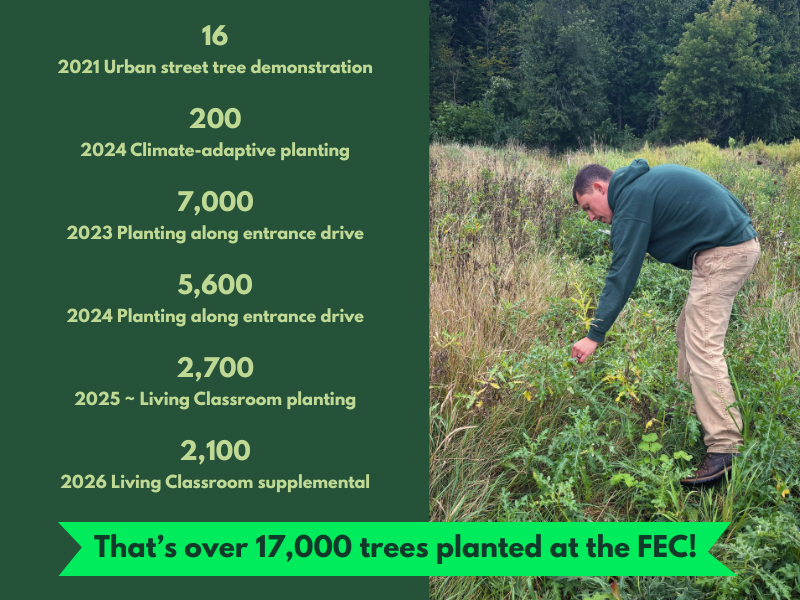
An urban tree demonstration area with 16 different species was planted east of the FEC parking lot.
2023-2024
A large white oak plantation was planted along the the FEC entrance road.
7,000 seedlings, including white oak, red oak, sugar maple, swamp white oak, and white pine were planted along the entrance road (near the bluebird nest boxes).
2024
200 seedlings were planted in the forest as one of our Climate-Adaptive strategies. Species include Butternut, Black Cherry, Hackberry, Southern Pin, White, and Chinkapin oaks, Sycamore, and Black Walnut.
2025
The first planting of our Living Classroom went in, showcasing tree species central to the development of Wisconsin’s history and economy.
2026
Supplemental planting for the Living Classroom was planted.